Empowering Strengths,
Celebrating Individuality
Hi, I’m Penny!
If everyday life often feels more exhausting, overwhelming, or effortful than it seems for others, you’re not alone. Many of the people I work with are managing high levels of demand and load in ways that are not always visible to others. My role is to help make sense of that experience and support you to find ways of living that feel more manageable and sustainable.
I’m a neuro-affirming psychologist based in Coffs Harbour and the founder of Sunflower Psychology Services. I support autistic, ADHD, and AuDHD youth and adults, as well as those that support them. I am a registered Medicare and NDIS provider.
My work is based on professional practice and lived experiences. My family is neurodivergent, including my three children, which has given me a deeper understanding of the realities of navigating the ups, the downs, the joys and the challenges associated with neurodivergence.
Many people experience a mismatch between their neurodivergent needs and the demands of everyday environments, meaning daily life often requires more effort than others may realise. This can affect capacity, wellbeing, participation, and day-to-day functioning, and may result in overwhelm, overload, burnout, exhaustion, meltdown, shutdown, withdrawal, people pleasing or masking. This can be understood as the interaction between a neurodivergent brain, nervous system, sensory profile, and environment, which impacts a person’s capacity and directly impacts their ability to manage and engage in daily life.
My approach
My work is strengths-based, neuro-affirming, and grounded in evidence-based practice. Supports are collaborative and focused on real-world application—turning understanding into practical strategies that support everyday life across home, education, and work.
How I support you
I provide neuro-affirming, capacity-building psychological support focused on understanding how your neurodivergent brain, nervous system, and environment interact. This includes:
Support is tailored to the individual but often includes:
Executive Functioning
Supporting difficulties with planning, organisation, task initiation, follow-through, prioritisation, and time management, with a focus on reducing cognitive load and improving day-to-day functioning.
Nervous System Regulation
Understanding patterns of overwhelm, overload, withdrawal, shutdown, burnout, and masking, while building practical strategies for regulation, recovery, and restoring capacity.
Emotional Regulation
Supporting emotional awareness, emotional intensity, rejection sensitivity, and the development of strategies to manage emotional load within the context of everyday demands.
Communication and Social Demands
Exploring communication differences, social expectations, boundaries, clarification strategies, and ways to reduce the energy costs associated with social interaction and feeling misunderstood.
Sensory and Environmental Needs
Understanding sensory profiles and how sensory and environmental demands influence energy, comfort, focus, stress, and overall capacity, while identifying practical environmental supports.
Energy and Daily Life Capacity
Exploring exhaustion, fluctuating energy, and capacity limits, alongside developing self-compassion, sellf-advocacy, and practical strategies for pacing, recovery, energy management, and sustainable daily routines that reduce overwhelm and support daily responsibilities.
My aim
My aim is to support improved everyday capacity by helping you understand your neurodivergent patterns and develop realistic, sustainable strategies that reduce overwhelm, support regulation, and create more ease, confidence, and a greater sense of control and direction in daily life.
You’re welcome to explore Sunflower Psychology Services and see what feels suitable for you, your family, your students, or your workplace.
Welcome to Sunflower Psychology Services!
-
Are you a parent who is ..…
Unsure what to do after your child’s diagnosis?
Wanting to understand your child’s needs, but not knowing where to start?
Uncertainty about how to support your child’s big emotions?
Finding daily life hard to manage — feeling stretched, exhausted?
Noticing sensory sensitivities?
Seeing difficulties with change and transitions?
Noticing your child experience rejection very deeply?
Challenges with social connections?
You’re not alone. Neurodivergent children experience and respond to the world in different ways. Their behaviours are meaningful, normal responses to their environment, nervous system, and sensory experiences.
I support parents to understand their child’s unique brain and feel more confident in how to support them.
Together, we can explore:
How your child’s brain and neurodivergent profile works
Making sense of behaviour and emotions through a nervous system lens
Supporting sensory and environmental impacts
Supporting your child’s preferred social connection style and communication preferences
Supporting their big emotions
Masking and supporting your child to feel safe being themselves
Creating predictable, supportive environments
Using strengths to build skills and confidence
Practical strategies to reduce overwhelm (for both you and your child)
Strengthening connection and your relationship
Advocacy at school and other settings
My aim is to support you with calm, confidence, and connection — so your child feels safe, understood, and better able to engage, learn, and navigate their world.
-
Are you experiencing…
Unsure where to start after a diagnosis?
Feeling overwhelmed & exhausted from the demands of everyday life?
Difficulties with sensory sensitivities?
Finding change, unpredictability, and transitions hard?
Difficulties with time management, organisation, or getting started?
Feeling unsure in conversations or social situations?
Strong emotions and reactions
Masking parts of yourself to fit in — and feeling exhausted?
You’re not alone. Neurodivergent brains experience and respond to the world in different ways.
I support neurodivergent youth and adults to better understand their brain and what helps them feel more supported and at ease in everyday life.
Together, we explore:
Your nervous system and what helps you feel more settled
Intense emotions and how they show up for you
Sensory needs and everyday supports
How your environment impacts your energy and functioning
Approaches to tasks, routines, and time that suit you
Using strengths to build capacity and guide strategies
Practical strategies to reduce overwhelm
Self-understanding, self-compassion, and sustainable self-care
Differences in communicaiton and social relationships
Masking patterns and safer ways to be yourself
Support is tailored to your strengths, needs, and goals — helping life feel more manageable and aligned with who you are at home, school, or work.
-
I work with teachers, schools, and workplaces to provide practical, individualised strategies that support neurodivergent students and employees.
Supports may include:
Understanding the neurodivergent brain
Linking behaviours and emotions to a sense of safety and nervous system needs
Supporting the development of new skills
Understanding and working with individual preferred social communication styles
Addressing sensory needs and adjusting environments to reduce overwhelm
Reducing cognitive overwhelm and supporting capacity throughout the day
Establishing routines that support attention, organisation, and time management
Supporting transitions and change
Building on strengths and interests to support engagement and motivation
I also support educators and employers to feel confident creating inclusive, supportive environments where neurodivergent individuals can thrive.

About Me
Hi, my name is Penelope, but please call me Penny!
My family is neurodivergent, including my three children who are autistic and ADHD. While every neurodivergent experience is unique, I also understand firsthand what it can feel like to be doing your best while navigating systems, appointments, advocacy, and moments of frustration or disappointment along the way.
I also understand how important it can be to feel genuinely understood — to sit with someone who listens without judgement and brings together both lived experience and professional knowledge. When my children were younger, I didn’t just need information; I needed clarity, reassurance, practical strategies, and someone to walk alongside us. That experience continues to shape the way I work today.
Wherever you’re at, I’ll meet you there. Together, we can focus on understanding the areas that impact your everyday life and developing personalised, practical strategies that support greater ease, capacity, and direction in a way that works for you.


Services
-
Parenting a neurodivergent child — whether autistic, ADHD, or AuDHD — often involves understanding how their brain works, what their behaviour is communicating, and what helps them feel safe, regulated, and able to engage.
I offer one-on-one parent consultations and practical workshops to build understanding and confidence.
Together, we make sense of your child’s emotions, behaviours, communication style, social connection preferences, sensory experiences, and responses to their environment, and explore ways to support everyday life at home, school, and in the community.
-
Being neurodivergent — whether autistic, ADHD, or AuDHD — often means learning how your brain works, what your experiences are communicating, and what helps you feel regulated and able to engage in daily life.
I offer one-on-one support for neurodivergent youth and adults, centring your strengths, interests, and lived experience.
Together, we make sense of how you process information, emotions, and sensory input, and explore your communication preferences, social connection needs, and environmental supports — so together, we can find practical strategies that work for you.
-
Teaching neurodivergent students — including those who are autistic, ADHD, or AuDHD — involves understanding how they learn, respond, and what helps them feel safe and able to engage.
I offer individual consultations for educators and school staff to support inclusive, responsive classroom practices.
Together, we can make sense of behaviour, emotions, and learning needs, and explore practical strategies such as supporting regulation, recognising masking, understanding sensitivity to perceived criticism, and adapting sensory, communication, and learning environments.
Workshops are also available.
-
I work with organisations through consultations and tailored workshops to build understanding of autism, ADHD, and AuDHD in the workplace.
Together, we explore how neurodivergent employees think, communicate, and respond to their environment, and identify supports that help them work effectively.
Workshops help teams create more inclusive and sustainable ways of working.
My Office
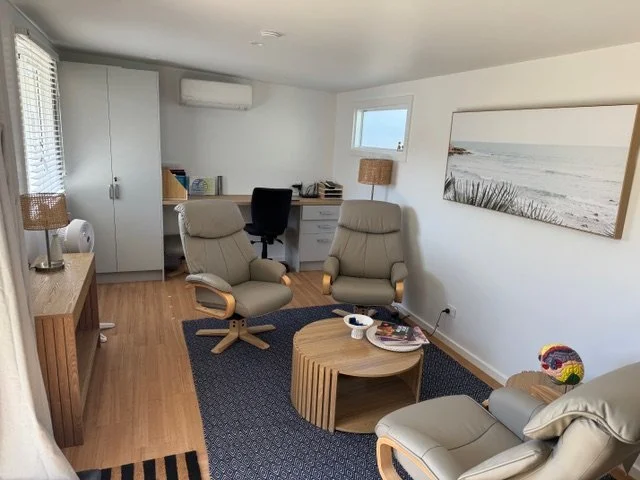
My office is a calm, cosy space designed to feel safe, welcoming, and unhurried. It offers a private setting where all individuals can feel supported, heard, and free to explore their thoughts and experiences at their own pace. Creating a gentle, respectful environment is central to the work I do.